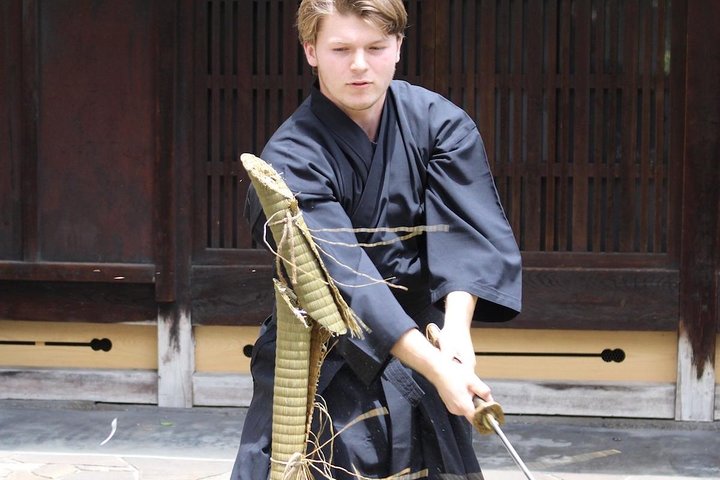


Warrior Culture Brought to Life
Samurai and ninja experiences in Kyoto range from educational (visiting samurai residences, learning about the warrior class that shaped Japanese history for 700 years) to participatory (sword-fighting lessons, ninja training courses, costume experiences) to theatrical (samurai shows, ninja performances). Kyoto was the imperial capital throughout the samurai era, and the city’s castles, temple districts, and aristocratic estates were the stages where samurai politics, loyalty, and betrayal played out.
Samurai experiences include visits to Nijo Castle (the Kyoto residence of the Tokugawa shoguns, with “nightingale floors” that chirp when walked on — an anti-intruder security system), sword-handling and kendo (Japanese fencing) lessons, samurai costume dressing with professional photography, and guided tours of the samurai-era sites.
Ninja experiences include ninja training courses (shuriken/throwing star practice, stealth techniques, obstacle courses), ninja museum visits, and ninja costume experiences. Kyoto’s ninja experiences are primarily entertainment-oriented and popular with families and children.
Frequently Asked Questions
Are samurai and ninja experiences authentic?
The educational content (the history, the castle visits, the cultural context) is genuine. The participatory elements (sword lessons, ninja training) are simplified and entertainment-oriented — they teach basic techniques in a fun format rather than reproducing historical warrior training. The costume experiences are dress-up. All are enjoyable; none claim to be historically rigorous combat training.
Are samurai/ninja experiences suitable for children?
Excellent for children aged 5 and above. The costume elements, the physical activities (throwing stars, sword poses, obstacle courses), and the theatrical presentations engage children enthusiastically.
Where is Nijo Castle?
Nijo Castle is in central Kyoto, approximately 15 minutes by bus from Kyoto Station or a short walk from Nijojo-mae subway station.