





Kyoto’s Most Atmospheric District
Gion is Kyoto’s historic geisha district — a neighbourhood of traditional wooden machiya townhouses, narrow stone-paved lanes, willow-lined canals, and the teahouses (ochaya) where geiko (Kyoto’s term for geisha) and maiko (apprentice geiko) entertain clients with conversation, music, dance, and the ritualised hospitality that has defined this district for over 300 years. Gion sits on the eastern bank of the Kamo River, centred on Hanamikoji Street, and extends from the Shijo Bridge east toward the hillside temples of Higashiyama.
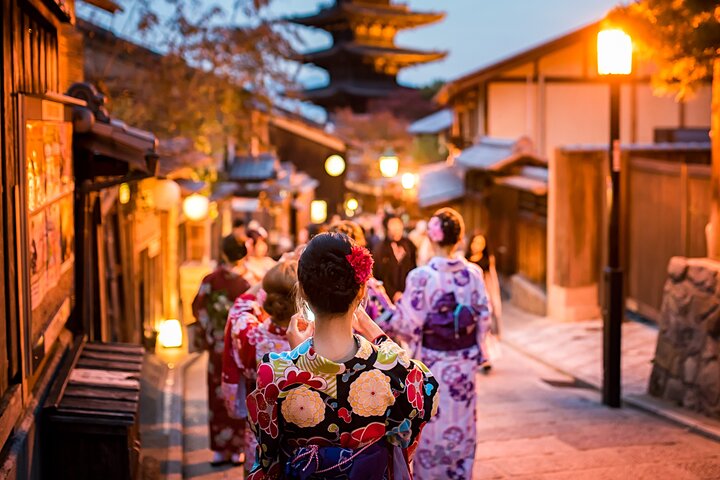
Walking through Gion in the early evening — when the lanterns illuminate the wooden facades, the stone pavement reflects the light, and the possibility of glimpsing a maiko in full white makeup and elaborate kimono hurrying to an appointment is genuinely real — is one of the most atmospheric urban experiences in Japan. The district looks as though it belongs in a different century, and in many ways it does: the ochaya operate under traditions that have been continuous since the Edo period, and the physical environment has been preserved with an intentionality that makes Gion feel less like a museum and more like a living time capsule.
A guided Gion tour provides the context that transforms the walk from pretty streets into comprehensible culture. Without a guide, you see wooden buildings and narrow lanes. With a guide, you understand the ochaya system (how the teahouses function, who the geiko and maiko are, what happens inside), the architectural details (the reed screens, the dog barriers, the lantern codes that indicate a teahouse’s status), and the etiquette that governs behaviour in a district where residents and cultural practitioners live alongside tourists.
What You Will See
Hanamikoji Street is Gion’s main avenue — a straight lane running south from Shijo Street, lined with the ochaya, restaurants, and traditional shops that define the district. The southern section (below Shijo) is the most atmospheric, with the highest concentration of active teahouses. This is where the evening maiko-spotting is most likely to succeed, and where the guide’s commentary on the buildings, the symbols, and the customs is most informative.
Shirakawa Canal — a narrow willow-lined canal running parallel to Shijo Street, with stone bridges, cherry trees (spectacular during the brief sakura season in early April), and traditional buildings reflected in the water. The canal at dusk, with the lanterns lit and the willows trailing, is one of the most photographed scenes in Kyoto.
Yasaka Shrine — the large Shinto shrine at the eastern end of Shijo Street, the spiritual anchor of Gion. Yasaka hosts the Gion Matsuri (one of Japan’s three greatest festivals, running throughout July, with the grand procession of enormous festival floats on 17 July). The shrine grounds are free, open 24 hours, and atmospheric at any time — particularly in the evening when the lanterns are lit.
Kennin-ji Temple — the oldest Zen temple in Kyoto (founded 1202), located within Gion itself. The temple’s gardens, the twin dragon ceiling painting, and the “Wind and Thunder Gods” screen painting (a National Treasure) are significant. Kennin-ji is less visited than the headline temples (Kinkaku-ji, Kiyomizu-dera) and its location within Gion makes it a natural addition to a district tour.
Tatsumi Bridge and the Tatsumi Shrine — a small stone bridge and a tiny shrine at the junction of Shirakawa Canal and Shimbashi Street, one of Gion’s most photogenic corners. The shrine is associated with the geiko and maiko, who visit it for good fortune.
Geiko and Maiko Etiquette
Gion is a working district, not a theme park. The geiko and maiko who walk its streets are on their way to or from professional engagements. Respectful behaviour is essential:
Do not block, grab, chase, or physically intercept geiko or maiko. This behaviour has become a serious problem and has led to access restrictions in parts of Gion. Observe from a respectful distance.
Do not photograph geiko or maiko aggressively. A discreet photograph from a respectful distance is acceptable. Shoving a camera into someone’s face, using flash, or following someone to get a better angle is not. Some sections of Gion have implemented photography bans in response to tourist behaviour.
Do not enter private alleys or teahouse doorways. The ochaya are private businesses — their entrances and the small lanes (roji) between them are not public walkways. A guide will explain which areas are public and which are not.
A guided tour teaches you the appropriate way to experience Gion. The guide manages the group’s behaviour, explains the etiquette, and positions you at points where the district’s character is visible without intruding on the residents and practitioners.
Practical Tips
Visit in the early evening (5:00–7:00 PM) for the best atmosphere. The lanterns are lit, the teahouse facades glow, and the geiko and maiko are most likely to be seen walking to engagements. Daytime Gion is pleasant but lacks the atmospheric quality of the evening.
Gion is compact and walkable. The core district covers approximately 1 square kilometre. A guided tour of 1.5–2.5 hours covers the main streets, the canal, the shrine, and the temple without exhausting the terrain.
Combine with a Higashiyama walk. Gion sits at the base of the Higashiyama hills, and the walk from Gion up to Kiyomizu-dera (through the Ninen-zaka and Sannen-zaka preserved streets) is one of the essential Kyoto experiences. Some tours combine the two.
Frequently Asked Questions
Where is Gion?
Gion is in eastern Kyoto, on the east bank of the Kamo River, centred on Hanamikoji Street south of Shijo Street. It is approximately 10 minutes by bus or taxi from Kyoto Station, or a 25-minute walk along the river.
Will I see a geisha in Gion?
Geiko and maiko are most visible in the early evening (5:00–7:00 PM) when they walk to engagements. Sightings are not guaranteed on any given evening but are common, particularly along Hanamikoji Street and the Shirakawa Canal area. A guide knows the routes and timing that maximise the chance of a sighting. Many people in kimono walking through Gion are tourists in rental kimono, not geiko or maiko — a guide will help you distinguish.
How long should I spend in Gion?
One and a half to two and a half hours covers the main streets, the canal, Yasaka Shrine, and optionally Kennin-ji temple. An evening visit (arriving around 5:00 PM) is the most atmospheric timing.
Is Gion free to walk through?
Yes. The streets are public and free to walk. Yasaka Shrine is free. Kennin-ji temple has an admission charge. Entering the ochaya (teahouses) requires an invitation and is not available to casual visitors — the teahouse experience is accessed through separate cultural experience bookings.
What is the difference between a geiko and a geisha?
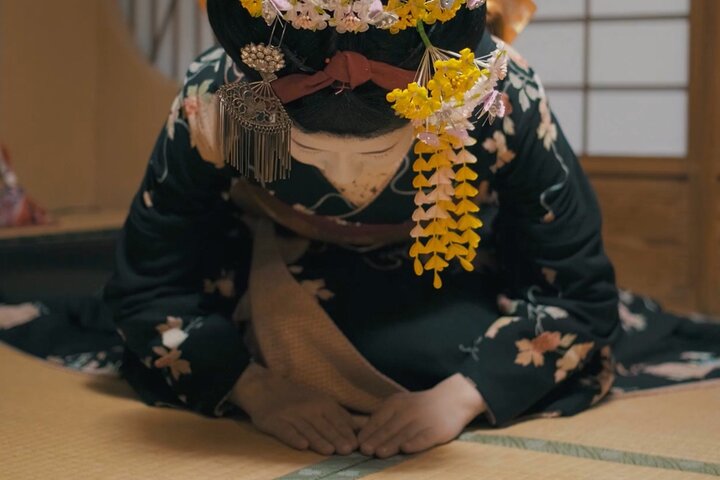
They are the same profession. “Geiko” is the Kyoto term; “geisha” is the Tokyo term. In Kyoto, the correct word is geiko. A maiko is an apprentice geiko, typically aged 15–20, distinguished by her more elaborate kimono, longer obi (sash), and distinctive white-painted face makeup.